
From the first days. The American Academy of Pediatrics says you can start doing tummy time the day your baby gets home from the hospital, and the NHS says from birth, with the baby lying on your chest. Neither body gives a date to wait for, and neither describes a point after which starting is too late.
That is the whole answer to when to start tummy time, and the rest of this page is what the guidance actually says about how, how much and why, quoted as closely as the sources put it. Start on the day you get home, or today if that day has passed. Two or three short sessions of three to five minutes, while the baby is awake and someone is watching. Build up gradually as the baby shows they enjoy it, toward a total of 15 to 30 minutes a day by around 7 weeks.
What does the American Academy of Pediatrics say?
The Academy’s page is called Back to Sleep, Tummy to Play, and the title carries the logic. Babies sleep on their backs because that is the safe sleep position. Tummy time is the awake, supervised counterpart, and the page is explicit that it is for babies who are awake and being closely supervised.
The numbers on the page are these. Play and interact with your baby while they are awake and on their tummy 2 to 3 times each day for a short time, which the Academy gives as 3 to 5 minutes. Then gradually increase the amount of tummy time as babies show they enjoy it, working up to 15 to 30 minutes each day by 7 weeks.
Two details in that sentence are easy to skate over. The first is the phrase as babies show they enjoy it. The build-up is paced by the baby, not by the calendar. The second is that 15 to 30 minutes is a daily total, not a session. Six sessions of four minutes clears it.
The Academy also suggests when in the day the sessions fit best: after a diaper change, or when the baby wakes from a nap. Those are the moments a baby is most likely to be awake, fed and reasonably content, which is the state the whole exercise depends on.
What do the NHS and the NIH add?
The NHS page Baby moves starts in the same place and takes a slightly gentler route in. You can start doing tummy time from birth by lying your baby on your chest, it says, with a caution that is worth keeping: only do this when you are wide awake and unlikely to fall asleep. Then gradually increase the time day by day, and when the baby is ready, try tummy time on the floor.
The National Institute of Child Health and Human Development’s Safe to Sleep page gives numbers that line up with the Academy’s almost exactly: most babies can start a day or two after they are born, newborns benefit from two or three short 3 to 5 minute sessions a day, and the aim is 15 to 30 minutes of total tummy time daily by around 2 months. The Academy says 7 weeks, the NIH says about 2 months. That is the same target described by two offices, not a disagreement.
Three national bodies, then, and one picture: start now, keep it short, build up as the baby tolerates it, and stay in the room.
What is tummy time for?
The sources say two things, and it is worth reporting them as they put them rather than inflating either.
The first is muscle. The NIH says tummy time helps strengthen neck, shoulder and arm muscles. The NHS says it helps strengthen the back, neck and shoulders, and adds, with feeling, that it gives the baby a different view of the world. The Academy frames it as building the strong muscles and skills a baby needs before sliding on the belly and crawling.
The second is the shape of the head. Babies who sleep on their backs, as they should, can develop a flat spot on the back of the head. The NIH lists preventing flat spots as one purpose of tummy time. The Academy’s wording is calmer than most of what circulates: although it is possible for a baby to develop a flat spot, it usually rounds out as they grow older and sit up. The Academy also suggests alternating which end of the crib the baby’s feet go, varying the baby’s position when awake, and limiting time in swings, bouncy chairs and car seats, as the other half of the answer.
That is the list. Neither body describes tummy time as a program, and neither attaches an outcome to a number of minutes.
Is three months too late to start?
The question turns up under every search on this subject, and the guidance simply does not contain a deadline. The Academy says start the day you come home; the NHS says from birth. Nothing on either page says anything about a baby who started later, because the advice is the same on whatever day you read it: two or three short sessions, build up as tolerated, awake and supervised.
If your baby is older and has done very little tummy time, you are in the same position as a parent on day one. Start with a few minutes. If you have a particular worry about your baby’s head shape or neck, that is a question for your pediatrician, said once and plainly, and it does not change what to do this afternoon.
What if the baby hates it?
Most of the practical advice in the three sources is about exactly this, which tells you how common it is.
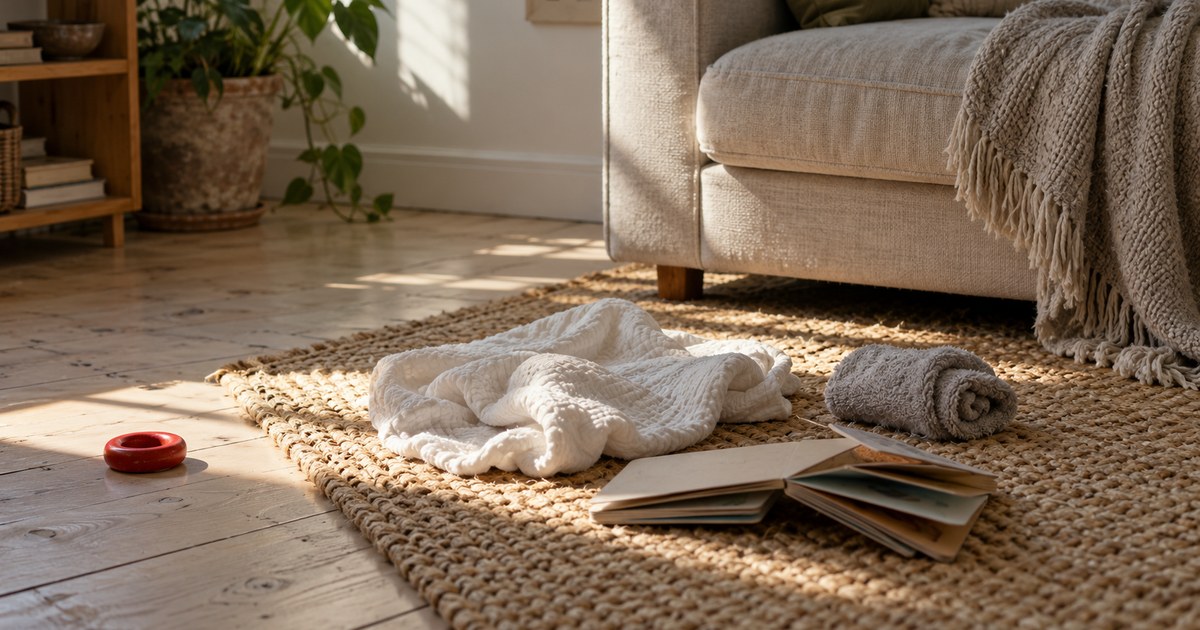
The NHS suggests lying the baby on your chest or across your lap instead of the floor, putting a few things within easy reach, and talking, singing and generally being interesting from the front. It also suggests propping the baby up a little by putting a small rolled-up towel under their arms. The NIH gives the same towel trick, and adds a blanket on a clear patch of floor and having someone sit in front of the baby. The Academy suggests placing yourself or a toy within reach, and says that eventually your baby will enjoy tummy time and begin to like playing in this position.
The phrase to hold onto is within reach. A newborn sees best at a short distance, roughly the span from a feeding baby to a parent’s face. Something propped a yard away is not in the picture yet. What a newborn can see covers that distance and how it grows, and when babies see color explains why a bold dark shape against a pale ground is the easiest thing for a very young baby to look at. Our printable high contrast cards are made to prop at that range during tummy time, which is one of the few things they are for. For more ways to spend the awake minutes around tummy time at that same close range, see things to do with a newborn.
What does it look like over the first months?
The Centers for Disease Control and Prevention’s milestone checklists describe what most babies do by a given age, published as ranges rather than deadlines. Among the movement items for 2 months is holds head up when on tummy. Among the items for 4 months is pushes up onto elbows/forearms when on tummy, along with holding the head steady without support when being held.
Those are descriptions of what tummy time gradually turns into, not tests to pass. A baby who lifts their head briefly and then plants their face in the blanket is doing it. The CDC’s own tip for 2 months is to lay your baby on their tummy when awake and put toys at eye level in front of them, which is the same advice as everyone else’s in one sentence.
What does the guidance leave open?
Quite a lot, and it is better to know that than to fill the gaps with confidence.
None of the three sources says how long a single session should be once the baby is past the newborn weeks. They give the daily total and leave the rest to you. None gives a point at which tummy time stops being worth doing, though the Academy’s framing implies it fades naturally into rolling and crawling. None says what to do about a baby who is content on the floor for two minutes and furious at three, except the general advice above, which amounts to: try again later, try on your chest, try being more interesting.
The pages quoted here have not met your baby, and they do not pretend to.
Ten minutes with the baby on the floor
Tummy time is floor time, and floor time needs no screen. Once a baby is on their back again, or upright in your arms, they will look at whatever is boldest and closest, and a face is the best thing available. Tiny Paws is for a few minutes after that: one heavy black and white animal on one bright color, which blinks, moves and makes its sound when a small hand lands on it, with you naming it out loud. It is a short shared thing, paid for once, with no ads and nothing in it that tries to keep anyone looking. The World Health Organization’s guidance is worth knowing before you decide where, if anywhere, it fits: screen time is not recommended for infants under 1 year, sedentary screen time is not recommended for 1-year-olds, and for children aged 2 to 4 it should be no more than 1 hour a day, with less being better. We state it in full on our screen time page.
So: the day you come home, or today. Three to five minutes, two or three times, awake and watched. Chest first if the floor is a step too far. Build up as the baby allows, toward 15 to 30 minutes a day by around 7 weeks. No deadline, nothing to make up for, and a rolled towel if it helps.
Sources
- Back to Sleep, Tummy to Play, American Academy of Pediatrics, HealthyChildren.org, last updated 8 September 2026
- Tummy Time, Safe to Sleep, Eunice Kennedy Shriver National Institute of Child Health and Human Development
- Baby moves, Best Start in Life, NHS
- Milestones by 2 Months, Learn the Signs. Act Early., Centers for Disease Control and Prevention
- Milestones by 4 Months, Learn the Signs. Act Early., Centers for Disease Control and Prevention