Why black and white?
A newborn's vision is still developing: the American Optometric Association notes that a baby's primary focus is on objects 8 to 10 inches from their face, and that babies may look intently at a highly contrasted target. Bold black-and-white shapes are simply the easiest thing for very young eyes to pick out, so they hold a baby's gaze.
Eight printable cards
These are the animals from the app, drawn in heavy black and white with one small patch of color. Print this page, cut along the lines, and you have a set.
 sheep
sheep cat
cat owl
owl fox
fox dog
dog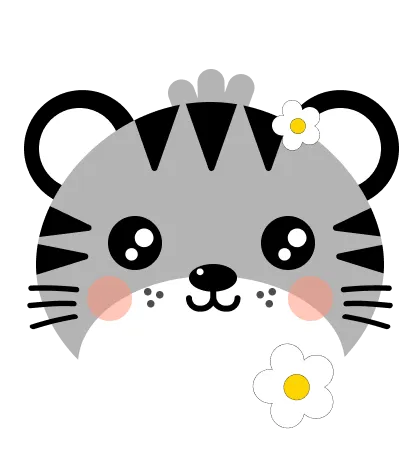 tiger
tiger elephant
 monkey
How to use them
- Close. About 8 to 12 inches from the face, which is roughly the distance to your own face when you hold them.
- Calm and alert. After a feed and a nap, not before. If they look away, they are done.
- One at a time. A single card is more interesting than a wall of them.
- Then slowly move it. From around three months, babies begin to follow moving objects with their eyes. Drift the card gently from side to side.
- Talk. Name the animal, make the sound. Your voice is the better half of the activity.
When do they stop needing contrast?
Color vision develops over the first months. The American Optometric Association says it is generally believed that babies have good color vision by 5 months of age, which is why contrast cards are most useful early on. By then most babies are more interested in faces, hands and anything they can grab, and the cards have done their job.
Read next: what a newborn can see, month by month and screen time for babies, stated plainly.
Questions parents ask
How do I use high-contrast cards?
Hold one card about 8 to 12 inches from your baby's face when they are calm and alert, and let them look for as long as they want. Move it slowly from side to side once they start following things with their eyes, at around three months. A minute or two is plenty.