A baby fox is a kit, a baby owl is an owlet, and a baby sheep is a lamb. Those are the dictionary answers, and two of them come with a footnote: New York’s wildlife agency calls young red foxes pups, and bird guides call young owls nestlings and then fledglings as they grow.
If you have ever been asked one of these at a farm gate and answered with confidence you did not quite have, this is the page for you. The names are mostly settled. The interesting part is the handful that are not, and the reason English reuses so few words for so many animals.
What do you call a baby fox?
A kit. Dictionary.com’s American entry, drawn from the Random House Unabridged Dictionary, defines this sense of kit as a young fox, beaver, or other small furbearing animal. The Collins English Dictionary entry on the same page gives the British sense as a cub of various small mammals, such as the ferret or fox.
So kit is correct, it is the word a picture book will use, and it is not the only word in circulation.
Then why do wildlife agencies say pups?
Because the people who study foxes for a living tend to use a different word from the one the dictionary lists first.
The New York State Department of Environmental Conservation’s red fox page calls them pups throughout, in sentences about both parents working to feed growing pups. The same page has the details a child will ask about next, once the name is out of the way. Red foxes breed in New York between December and April, with a peak in January and February. Gestation runs about 52 days. Litters vary from 1 to 12, with 3 to 6 being common. The young are weaned by about week 12, which is when they start learning to hunt for themselves.
None of that makes kit wrong. It means the word has two homes: the dictionary and the story book on one side, the field biologist on the other. If a child comes home from a nature center calling them pups, the nature center is not mistaken.
This is worth saying out loud because most lists of baby animal names online present a single tidy answer for every animal, and for foxes at least, there is not one.
What do you call a baby owl?
An owlet. The Random House entry gives it as a young owl. The Collins entry is slightly more precise and says a young or nestling owl, which points at the same distinction bird guides make.
The National Audubon Society’s field guide entry for the great horned owl uses young, nestlings and fledglings rather than owlet, and it describes a timeline worth knowing. The clutch is usually 2 or 3 eggs, sometimes 1 to 5, and rarely 6. The young may leave the nest and climb about on nearby branches at around 5 weeks old, well before they can fly. Flight comes at about 9 to 10 weeks, and the parents go on feeding them for up to several months after that.
That middle stage is the one that causes trouble every spring. A young owl on a low branch, fully feathered and unable to fly, is not in difficulty. It is 5 weeks old and doing exactly what the field guide says it should be doing.
So: owlet is the word. Nestling means it is still in the nest, and fledgling means it has left the nest but is still working on the flying.
What do you call a baby sheep?
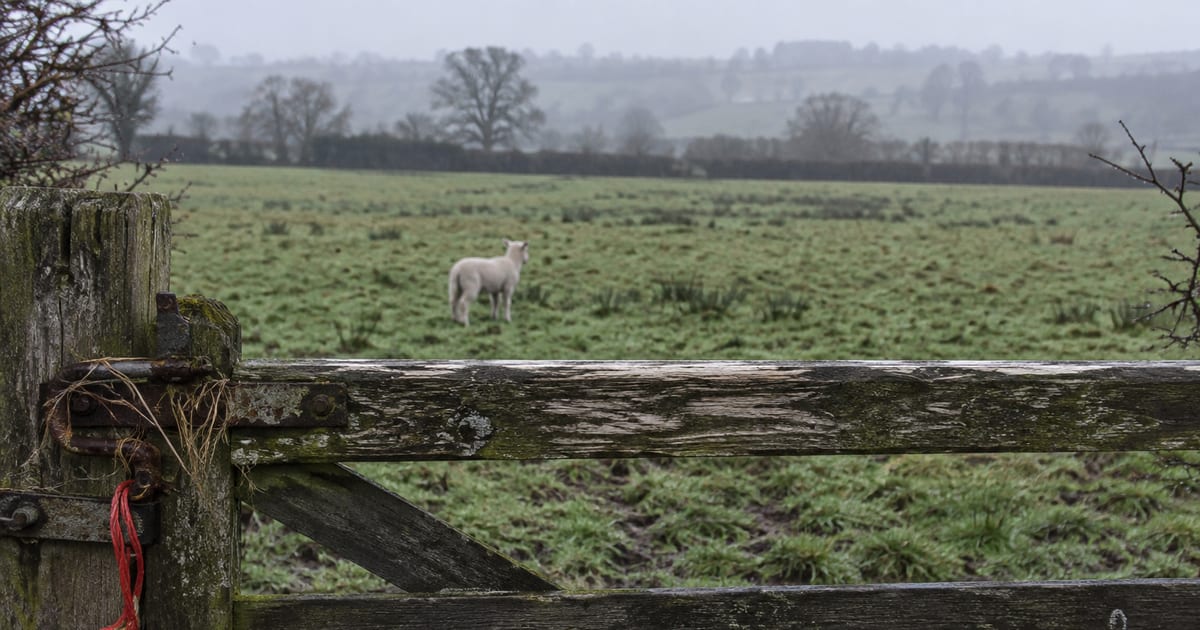
A lamb, and this one is refreshingly uncomplicated. Dictionary.com’s entry, again from the Random House Unabridged Dictionary, gives the noun straightforwardly as a young sheep. No competing term, no field-guide footnote, no regional variation to trip over.
It is also the baby animal name that arrives earliest for most small children, because it turns up in songs and picture books long before anyone explains what a sheep is.
Why does one word cover so many different animals?
Because English never built a full set. It built a handful of words for young animals and then spread them across the animal kingdom, which is why the same word keeps reappearing where you do not expect it.
The dictionary entries above show this happening in real time. The Random House definition of kit does not name one animal: it says a young fox, beaver, or other small furbearing animal, leaving the door open. The Collins definition does something even stranger and defines a kit as a cub of various small mammals, using one shared baby-animal word to explain another one. Two general-purpose words, stacked.
That is the pattern across the whole list. A few farm animals kept their own ancient, specific words, which is why lamb has no competition and no ambiguity. The wild animals, which most English speakers historically saw far less often, mostly share a small pool of borrowed terms. Our full table of baby animal names has the names for every animal in the app, plus the ones children ask about most, in one place rather than scattered through an article.
Which names do small children actually ask about?
The ones attached to animals they have seen, which is a much shorter list than the internet’s.
Farm animals come first, because they are in every board book. Then whatever is local: foxes in a city garden, owls if somebody has pointed one out, sheep if there has been a field. The names for animals a child has never encountered do not stick, and there is no reason they should. For the noises that go with them, see which farm animal sounds a toddler tries first.
Which means the useful version of this list is not the longest one. It is the one that covers the eight or ten animals your particular child keeps coming back to, said out loud, in the same words, until they start saying them too.
Long before that, naming things aloud is already worth doing for its own sake, and it needs nothing bought. A baby who is weeks old is working with shapes, contrast and a face at close range rather than vocabulary, which is a stage worth understanding on its own terms: when babies see color covers what is actually arriving and when.
Tiny Paws is the small version of the farm gate. One heavy black and white animal sits on one saturated color and stays there, blinks, moves, and makes its sound when a hand lands on it, and you say the name. Eight characters, a single purchase, no adverts and nothing built to keep anyone looking. Before you decide whether it belongs in your day, the World Health Organization’s guidance is that screen time is not recommended for infants under 1 year, that sedentary screen time is not recommended for 1-year-olds, and that for ages 2 to 4 it should be no more than 1 hour a day, with less being better. Our screen time page states it in full rather than around it.
Kit, owlet, lamb. Pups if you ask New York, nestling until it leaves the nest, and a lamb either way.
Sources
- kit, Dictionary.com Unabridged based on the Random House Unabridged Dictionary, with the Collins English Dictionary British entry
- owlet, Dictionary.com Unabridged based on the Random House Unabridged Dictionary, with the Collins English Dictionary British entry
- lamb, Dictionary.com Unabridged based on the Random House Unabridged Dictionary
- Red Fox, New York State Department of Environmental Conservation
- Great Horned Owl, Audubon Field Guide, National Audubon Society