Moo for the cow, baa for the sheep, oink for the pig, quack for the duck, neigh for the horse, cluck for the hen, cockadoodledoo for the rooster, and woof and meow for the dog and cat that live on every picture-book farm. Those are the farm animal sounds English settled on, and the dictionary treats the ones it lists as real words, each with a date of birth.
Which ones a toddler tries first is a better question than it looks, because for once there is real data behind the answer. The vocabulary checklist that child-language researchers use to track early words has a category for animal sounds, and it is category number one on the form. When the Wordbank project pooled those checklists, woof woof turned up among the first ten words American toddlers produce, ahead of most of the nouns in the house.
What sound does each farm animal make?
The written words, with the dictionary behind them.
A cow says moo. Dictionary.com’s American entry, drawn from the Random House Unabridged Dictionary, defines the verb as to utter the characteristic deep sound of a cow, and gives the older word for the same thing, low. The word was first recorded in 1540 to 1550 and is marked imitative, which is the dictionary’s way of saying somebody wrote down the noise.
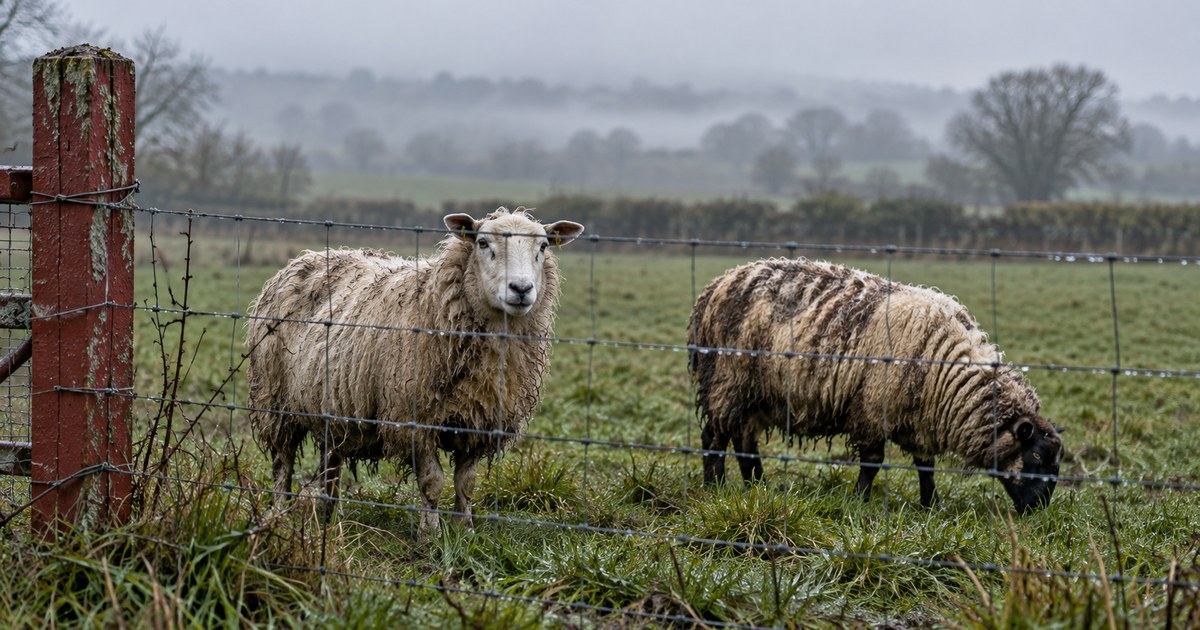
A sheep says baa. The same dictionary defines the verb as to make the sound of a sheep, and the noun as the bleating cry of a sheep. First recorded 1580 to 1590, also imitative. The Collins British entry on the same page says simply the cry made by sheep.
A pig says oink, and here the dictionary has a surprise. The American entry defines the noun as the squealing or grunting sound made by a pig, but the word is a newcomer: first recorded in 1940 to 1945. Pigs were grunting in English farmyards for centuries before anyone agreed on how to spell it. The Collins entry files it as an interjection, an imitation or representation of the grunt of a pig, which is the honest description of what all of these words are.
The rest follow the same pattern. Quack for the duck, neigh for the horse, cluck for the hen, and cockadoodledoo for the rooster, which is the longest word a small child will say for some time.
Which animal sounds do toddlers say first?
The tool that answers this is the MacArthur-Bates Communicative Development Inventory, a checklist parents fill in to record which words their child says. Section 1 of the Words and Sentences form, before animals, vehicles, toys or food, is called Sound Effects and Animal Sounds and holds twelve items: baa baa, choo choo, cockadoodledoo, grrr, meow, moo, ouch, quack quack, uh oh, vroom, woof woof and yum yum.
Two things stand out. Six of the twelve are animal sounds, seven if grrr counts, and four of them belong to the farm proper: baa baa, cockadoodledoo, moo and quack quack, with the dog and the cat close behind. And the researchers who built the form doubled most of them, baa baa rather than baa, because that is how children actually say them.
Wordbank, an open database that pools these checklists across languages, published the results in book form. Chapter 8, on consistency in early vocabulary, lists the ten words produced earliest by American English-speaking children: mommy, daddy, ball, bye, hi, no, dog, baby, woof woof and banana. The authors describe first words as consisting primarily of important family members, social routines, and sounds, with yum yum, vroom and woof woof as the examples of the third group.
So the plain answer is that woof woof tends to come very early, often inside the first ten words, and the other farm sounds are close behind it as a group. The book does not rank moo against baa against quack, and this post will not either. The sensible reading is that the sound a child hears most, from the animal they meet most, whether in the yard or the picture book, is the one that arrives first.
Why do animal sounds count as words?
Because they behave like words. A child who says woof woof when the dog comes in, and only then, is using a sound to refer to something, which is what a word is for. The people who designed the checklist put the sounds in the vocabulary section rather than a separate box for the same reason.
It also helps that the sounds are easy to say. Repeated syllables, a single consonant and a single vowel, said with the mouth already half open: baa baa and moo are about as simple as speech gets. That is a description of the words, not a theory about learning, and the reason they come first is probably a mix of easy to say and worth saying.
What about the sounds nobody agrees on?
English has firm words for the loud animals and vague ones for the quiet animals. The cow, the sheep, the pig and the rooster are all settled. The rabbit and the goat are not, and any two adults asked will give two different answers.
The other complication is that farm sounds vary between languages. The word for what a dog says is not woof everywhere, and the book compares checklists from many languages precisely because the early words are not the same list translated. What is consistent, the Wordbank authors found, is the kind of word that comes first: people, routines and sounds, wherever the child is growing up.
Which is a good reason to relax about the exact sounds. There is no correct moo. There is the one your household says.
Saying the sound to a baby who cannot say it back
The names come before the sounds, or the sounds before the names, and it does not much matter which. Our table of baby animal names has the words for the young of every animal in the app, and what to call a baby fox, owl or sheep works through the ones where the dictionary and the field guide disagree. The animal names are the next step, such as what to call a baby tiger, elephant or monkey.
Before any of that, a baby just needs to hear the sound attached to the animal, over and over, from a face at close range. A sheep in a field, a dog in the park, a cow on a milk carton, and a grown up saying baa, woof, moo, in the same flat, cheerful voice each time. Nothing about that needs buying, and most of it happens on the way to the store.
Tiny Paws is the small, indoor version of that. One heavy black and white animal sits on one bright color and stays there. Touch it and it blinks, moves and makes its sound: the sheep says baa, the dog says woof, the cat says meow. The animal does not talk, count, or say the name for you, because saying the name is the part that matters and it is yours. You pay once and nothing in it is ever selling anything again. The World Health Organization’s guidance is worth having in front of you before you decide whether it belongs in your day: screen time is not recommended for infants under 1 year, sedentary screen time is not recommended for 1-year-olds, and for children aged 2 to 4 it should be no more than 1 hour a day, with less being better. Our screen time page states it in full.
Moo since the 1540s, baa since the 1580s, oink since the 1940s. Woof woof in the first ten words. The rest in whatever order your particular farm turns up.
Sources
- moo, Dictionary.com Unabridged based on the Random House Unabridged Dictionary, with the Collins English Dictionary British entry
- baa, Dictionary.com Unabridged based on the Random House Unabridged Dictionary, with the Collins English Dictionary British entry
- oink, Dictionary.com Unabridged based on the Random House Unabridged Dictionary, with the Collins English Dictionary British entry
- The MacArthur-Bates Communicative Development Inventory: Words and Sentences, Part I, Vocabulary Checklist, CDI Advisory Board 2023, hosted by the Sherlock Center, Rhode Island College
- Consistency in Early Vocabulary, chapter 8 of Variability and Consistency in Early Language Learning: The Wordbank Project, Frank MC, Braginsky M, Yurovsky D, Marchman VA, MIT Press 2021, open access edition